
China Top Fitness Trampoline Suppliers for Global Buyers

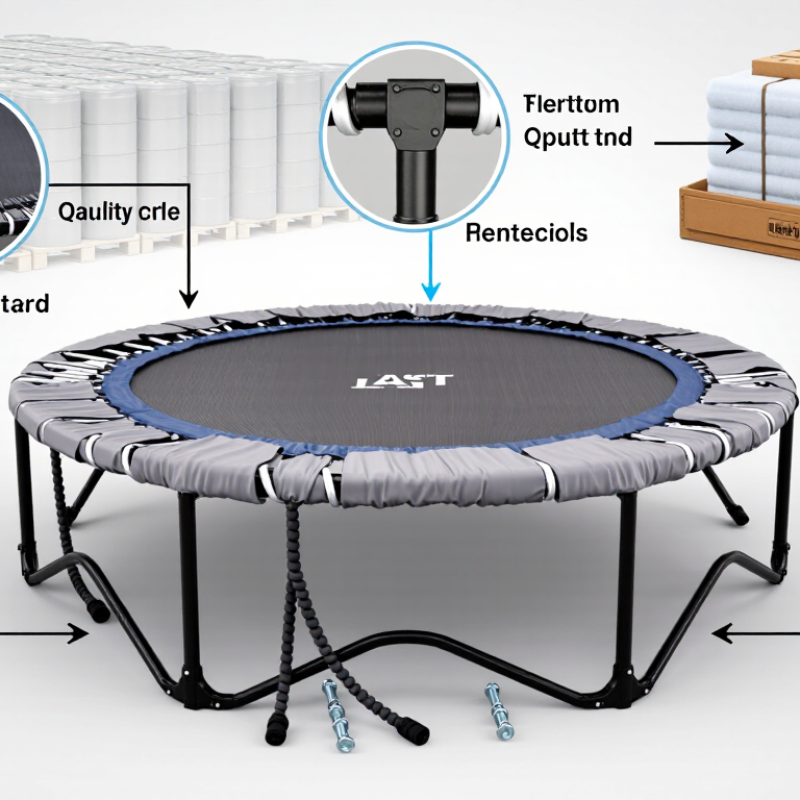
Choosing China’s top suppliers of Fitness Trampolines takes more than comparing prices. Global buyers need to assess frame stability, mat tension, spring or bungee construction, packaging, and the supplier’s ability to keep specifications consistent across repeat orders. A compact trampoline may look sturdy in a product photo, yet small details matter: welded joints, edge-pad coverage, and clear assembly instructions all affect the buyer’s experience.

As a sourcing perspective for this guide, fitness-equipment specialist Maya Chen puts it this way: “A reliable trampoline is proven in the details you can inspect, not just the claims you can read.” Treat that as a practical reminder, not a substitute for documented testing. Request product specifications, sample units, quality-control information, and written answers about materials and production capacity. Then compare suppliers against the same checklist.

Details matter. A lot.

This overview is designed to help buyers identify manufacturers and trading companies that communicate clearly and support informed decisions. It considers product range, customization, quality practices, export experience, and responsiveness. Those signals are useful, but they are not guarantees; supplier capabilities can change, and public information may be incomplete. Verify important claims directly, inspect samples where practical, and agree on measurable acceptance criteria before placing an order. The right partner should be able to explain how each Fitness Trampoline is built, checked, packed, and supported after shipment. That conversation may reveal more than a polished catalog ever will.
China Top Fitness Trampoline Suppliers for Global Buyers

China’s Fitness Trampoline Supplier Landscape for Global Buyers

China’s fitness trampoline supplier landscape serves gyms, home-fitness retailers, and contract manufacturers worldwide. Suppliers commonly offer folding frames, adjustable handlebars, replacement mats, and private-label packaging. Factory capability varies widely, even within the same industrial region. Some factories focus on metal forming, while others assemble complete units through partner workshops.

A serious buyer should inspect frame welds, spring tension, mat stitching, and rubber foot stability. Ask for load-testing records, material specifications, and production photographs. Request a pre-production sample before approving a large order. Measure rebound consistency after repeated use, not only during a short demonstration. Check packaging strength with carton-drop testing, especially for long-distance shipping. Compliance documents should match the destination market and the exact model ordered.

Communication quality matters as much as factory equipment. Clear drawings can prevent incorrect handle heights or unsuitable tube thickness. Yet supplier websites may show outdated machinery or borrowed project images. Sample quality can also exceed mass-production quality. This risk deserves attention. Buyers should define inspection points, acceptable defect limits, spare-parts quantities, and shipment terms in writing. Production schedules may shift during peak seasons, so realistic buffer time is necessary. A lower quotation is not always economical after repairs, delays, and rejected goods. Experienced sourcing teams usually compare technical evidence, factory consistency, and after-sales responsiveness before selecting a long-term Chinese supplier.

Key Product Types and Features of Commercial Fitness Trampolines

Commercial fitness trampolines now serve studios, gyms, rehabilitation rooms, and hotel fitness centers. The main product types include compact rebounders, studio mini trampolines, and larger cardio trampolines with support bars. Each type suits a different training space.

Compact rebounders usually measure 36 to 48 inches across. They need strong steel frames, replaceable elastic cords, and non-slip feet. Studio models often include padded surfaces and adjustable handles. Larger commercial units provide more landing space, but they require greater floor clearance. A 2022 WHO report found that 31% of adults worldwide do not meet recommended activity levels. Low-impact rebound training may help facilities offer a more approachable cardio option.

Durability matters more than bright colors. Buyers should check frame welds, mat tension, spring or bungee construction, and published user-weight limits. A quality surface should feel stable under repeated jumps, not sharply rebound like a toy. Noise control also matters in group studios with hard floors. The Global Wellness Institute reported that the wellness economy reached 5.6 trillion dollars in 2022, showing continued demand for accessible exercise formats. However, market demand does not guarantee product quality. Some suppliers describe a trampoline as “commercial” without providing cycle-testing data. That gap deserves careful questioning.

Request test reports, replacement-part lists, warranty terms, and cleaning instructions before purchase. A supplier that cannot explain mat replacement may create higher operating costs later. Safety is never a decorative feature.

China Top Fitness Trampoline Suppliers for Global Buyers - Key Product Types and Features of Commercial Fitness Trampolines

Product Type Typical Size Suspension System Frame and Legs Common Features Typical Commercial Use Buyer Checks
Studio Mini Rebounder Approximately 36–45 in (91–114 cm) across Steel springs or elastic cords, depending on model Steel frame; usually detachable or screw-in legs Compact footprint, non-slip mat, replaceable suspension components Group fitness classes, personal training, and small studios Confirm the stated user-weight limit, assembled dimensions, spare-part availability, and stability on studio flooring.
Rebounder with Balance Handle Approximately 36–45 in (91–114 cm) across Steel springs or elastic cords Steel frame with an adjustable or removable handlebar Support handle for balance; some models offer height adjustment and folding legs Beginner classes, low-impact exercise areas, and supervised training Check handle attachment points, adjustment range, locking mechanism, and whether the handle is intended for balance support rather than body-weight support.
Elastic-Cord Fitness Rebounder Commonly about 36–45 in (91–114 cm) across Elastic cords or bungee-style suspension Steel frame; cord layout and attachment method vary Quieter rebound than many metal-spring designs; cords may be replaceable Indoor studios and settings where reduced impact noise is desirable Ask for cord material, replacement procedure, inspection guidance, and the manufacturer’s documented user-weight rating.
Spring-Based Fitness Rebounder Commonly about 36–45 in (91–114 cm) across Metal extension springs Steel frame with legs designed for repeated use Familiar spring response; individual springs may be replaceable Fitness clubs, multipurpose training rooms, and instructor-led classes Review spring corrosion protection, mat-to-frame connections, pinch-point design, and the recommended inspection schedule.
Foldable Commercial Rebounder Usually a compact mini-rebounder size when open; folded dimensions vary Springs or elastic cords, depending on model Folding frame or folding legs with a locking design Designed for easier storage and transport; may include a carry bag Mobile instructors, shared-use facilities, and limited-storage studios Verify the folding and locking instructions, setup time, folded dimensions, and whether repeated folding affects the warranty.
Large-Surface Fitness Trampoline Size varies by design and intended exercise format Springs or elastic suspension, as specified by the manufacturer Reinforced frame; may require more floor space than a mini-rebounder Larger jumping surface; some designs include perimeter padding Dedicated exercise spaces and programs requiring a broader jumping area Check the complete footprint, required clearance, transport dimensions, assembly requirements, and applicable commercial-use rating.

Dimensions and construction vary by model. Before ordering, request current product specifications, user-weight limits, test documentation, warranty terms, and replacement-part details from the manufacturer.

Quality Standards and Safety Requirements for International Markets

For global buyers, a fitness trampoline is not just a steel frame and elastic mat. It is a controlled exercise product exposed to repeated impact, sweat, and careless storage. The WHO Global Status Report on Physical Activity 2022 estimated that 31% of adults worldwide were insufficiently active, increasing demand for compact home equipment. Suppliers should therefore provide test records, not vague claims. Relevant references include ISO 20957-1 for stationary training equipment, EN 913 for general gymnastics equipment, and ASTM F381 for trampoline safety specifications.

During supplier audits, buyers should inspect weld consistency, frame deformation, mat tensile strength, spring fatigue, edge padding, and non-slip feet. A rebounder that shifts several centimetres on a hard floor deserves rejection. Labels should state user limits, assembly instructions, inspection intervals, and safe clearance. Traceable batch numbers also help manage recalls across different markets. The U.S. Consumer Product Safety Commission has repeatedly reported close to 100,000 trampoline-related emergency visits annually, showing why safety evidence matters beyond factory photographs. Documentation can still be incomplete. That happens. Independent laboratory testing remains more reliable than an internal checklist, especially when suppliers serve Europe, North America, and Australia under different requirements. Buyers should request current reports, verify sample identity, and repeat critical tests after design changes. A cheaper frame may pass a showroom inspection but fail after months of daily jumping. Perhaps this is where many purchasing decisions remain too optimistic.

How to Evaluate and Select a Reliable Chinese Supplier

Selecting a Chinese fitness trampoline supplier takes more than comparing unit prices. Ask for the factory’s business details, production capabilities, and recent export references. Verify that the workshop can show frame welding, mat stitching, and final inspection—not just polished showroom photos. Small details matter.

Request a sample and inspect it under realistic use. Check that the frame sits level, the springs attach evenly, and the mat has no loose threads or sharp edges. Ask for test records and clarify which product standards apply in your destination market. One sample is not a guarantee. Batch quality can vary, so discuss in-process checks and ask how inspection results are recorded.

Confirm the steel and fabric specifications in writing, along with minimum order quantities, production time, packaging, and spare-part availability. Request a clear process for reporting defects, including response times and remedies. A fast reply is useful, but it does not prove production is reliable. Compare answers with documents and sample details. No supplier is flawless. Your checklist may miss something; revise it after reviewing the first sample and factory evidence.

Ordering, Customization, Shipping, and After-Sales Support

China Top Fitness Trampoline Suppliers for Global Buyers

Reliable ordering starts with clear product specifications. Confirm diameter, frame steel, spring type, mat material, weight capacity, and packaging size. Experienced buyers request factory photos, production samples, and recent quality inspection reports. A supplier should explain testing procedures, not only provide attractive prices. Ask about minimum order quantities, payment stages, production time, and spare parts before signing. Small details prevent expensive misunderstandings.

Customization can cover colors, logos, safety pads, cartons, instruction manuals, and accessory kits. Share drawings, Pantone references, and packaging dimensions in writing. Request a pre-production sample before mass manufacturing. It may delay the order slightly. That delay is often cheaper than correcting thousands of units. For shipping, compare full-container and consolidated cargo options. Confirm carton marks, loading photos, shipping terms, estimated departure dates, and destination documents. Weather, port congestion, and peak seasons can change schedules, so avoid promises based on perfect conditions.

After-sales support should be measurable. Request a written warranty period, defect-report process, response time, and replacement-part policy. Good suppliers keep records using product batches and carton numbers. Ask how they handle damaged springs, torn mats, or missing hardware. Video inspection can speed up technical discussions. Keep evidence. A practical service team offers installation guidance and troubleshooting instructions. However, communication may still become slow after payment. This is a common risk, and buyers should review service performance before placing a larger order. Clear responsibility matters more than friendly sales language.

Contact Us