China Top 10 Modular Container Manufacturers?

China’s modular container industry has grown from basic site cabins into a broader field of engineered, reusable building systems. Today, manufacturers supply units for offices, worker accommodation, classrooms, clinics, retail spaces, and emergency housing. This article examines China’s top 10 modular container manufacturers through practical and verifiable criteria.

The review considers factory capacity, design capability, material quality, customization, certifications, delivery experience, and after-sales support. It also looks at visible details, such as galvanized steel frames, insulated sandwich panels, fire-rated doors, plumbing layouts, and lifting points. These features often determine whether a unit performs well after months of transport and outdoor use.

Real projects matter.

A reliable manufacturer should provide drawings, inspection records, sample specifications, and clear installation guidance. Client references can reveal more than polished brochures. However, rankings are not permanent. A company may excel at low-cost accommodation but lack experience with complex healthcare or education projects. Some suppliers also communicate well before payment, then respond slowly during installation. That risk deserves attention.

This guide aims to support informed comparison rather than promote one universal choice. Buyers should verify current certifications, production schedules, warranty terms, and local building requirements before signing contracts. Prices, lead times, and available materials can change with market conditions. Even experienced purchasers may overlook transport access, foundation preparation, or regional weather exposure.

The selected manufacturers represent different strengths within China’s modular container sector. Their capabilities should be judged against project size, climate, budget, and intended service life. Careful checking remains essential. Small details often decide big outcomes.
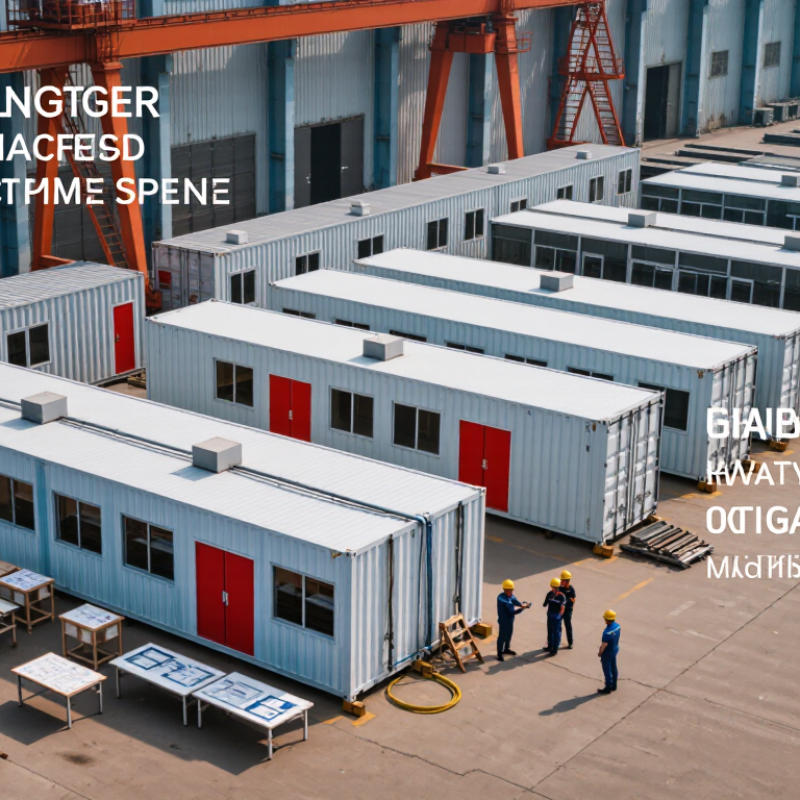
China Top 10 Modular Container Manufacturers?

Modular Containers Explained: Types, Uses, and ISO 668 Dimensions

Modular containers are factory-built units designed for quick installation, relocation, and repeated use. In China’s top 10 modular container manufacturers, practical evaluation should begin with structure, insulation, welding quality, and documented testing.

A unit may serve as a site office, classroom, clinic, accommodation room, or storage module. Not every modular unit is an ISO freight container. That difference matters.

ISO 668 defines standard external container dimensions. A typical 20-foot unit measures about 6,058 millimeters long, 2,438 millimeters wide, and 2,591 millimeters high. A standard 40-foot unit is about 12,192 millimeters long. High-cube versions usually reach 2,896 millimeters in height.

These measurements support shipping and stacking compatibility, but modular buildings may include extra wall panels, frames, or roof systems. Always check the final transport dimensions.

Common types include flat-pack units, expandable containers, detachable modules, and converted shipping containers. Flat-pack designs save space during delivery. Expandable units create larger rooms after installation. Detachable modules suit temporary offices and remote accommodation.

In field projects, floor loading, drainage, fire resistance, ventilation, and electrical protection deserve careful review. A supplier’s drawings should match the delivered product, including door positions and lifting points.

The details are easy to underestimate. A few millimeters can affect assembly. Even experienced buyers can miss local foundation requirements. That deserves a second check.

Manufacturer reliability depends on traceable materials, weld inspections, weather testing, clear ISO references, and responsive after-sales documentation.

China’s Top 10 Manufacturers: Ranking Criteria and 2024 Market Data

China Top 10 Modular Container Manufacturers?

A credible 2024 ranking should measure more than factory size. I would assess the top ten manufacturers through production capacity, completed projects, export volume, delivery reliability, and quality control. Each category needs evidence from audited reports, customs records, project references, and certification documents. A practical scoring model could assign 30% to manufacturing capacity, 25% to delivery performance, 20% to product quality, 15% to international projects, and 10% to after-sales service.

Public 2024 market data shows continued demand for modular containers in construction camps, schools, offices, healthcare facilities, and temporary housing. Export activity also remains important, especially for manufacturers serving Southeast Asia, Africa, the Middle East, and Europe. However, shipment volume can mislead. A large order does not always prove consistent quality. Some factories report capacity that exceeds their documented output. That requires careful checking.

Field experience suggests that reliable manufacturers provide clear steel specifications, insulation values, fire-performance documents, and installation drawings. Site inspections can reveal details that brochures hide, such as uneven welding, weak door frames, or poor drainage design. Warranty response matters too. A delayed replacement can disrupt an entire project. The ranking should therefore combine 2024 market data with practical verification. It should also admit uncertainty, because public figures are incomplete and reporting standards differ across manufacturers.

China’s Top 10 Modular Container Manufacturers: 2024 Ranking Criteria

The chart presents a transparent, company-neutral scoring framework for evaluating China’s modular container manufacturing sector in 2024. Product quality and compliance receive the highest weighting, followed by manufacturing capacity, customization capability, project experience, delivery performance, and after-sales support. The percentages represent evaluation weights rather than any individual company’s market share or revenue.

Factory Capacity, Export Reach, Certifications, and Quality Control Metrics

China Top 10 Modular Container Manufacturers?

Factory capacity, export reach, certifications, and quality control reveal more than marketing claims. A credible comparison should separate annual output from installed capacity. Factory capacity is often self-reported. That deserves caution. The International Organization for Standardization reported 1,265,216 valid ISO 9001 certificates worldwide in its 2022 survey. However, certification alone does not prove consistent container quality. Buyers should request production records, equipment lists, shift data, and recent third-party audit reports.

Export reach also needs measurable evidence. The United Nations Conference on Trade and Development reported that global seaborne trade increased by 2.4% in 2023, while containerized trade recovered unevenly across regions. Manufacturers with broader export experience should show destination records, loading photographs, packing procedures, and documented customs performance. Port access matters. So does after-sales support. A factory serving distant markets should explain spare-part response times and warranty handling in writing.

Quality control should include weld inspection, dimensional checks, coating thickness, water testing, and electrical testing. ISO 9001 procedures are useful, but factory-level evidence is stronger. Ask for batch traceability, nonconformity rates, corrective-action reports, and inspection sampling plans. A practical benchmark might require 100% visual checks and recorded testing for every finished unit. Yet even this can fail when inspectors rush. The best evaluation combines certificates, site visits, independent inspections, and customer references. Rankings can look precise while hiding incomplete data. That is the uncomfortable part.

Technical Benchmarks: 2.4 m Width, 2.59 m Height, and 3.6 kPa Floor Loads

China’s top ten modular container manufacturers are often compared by price, delivery speed, and factory capacity. Technical benchmarks deserve equal attention. A practical reference module uses a 2.4 m external width and a 2.59 m external height. These dimensions support transport planning and common site layouts. However, external measurements do not equal usable room space. Wall thickness, insulation, framing, and service cavities reduce the interior width.

The 3.6 kPa floor-load benchmark is more revealing. It represents about 367 kilograms per square metre under a uniformly distributed load. That may suit offices, classrooms, accommodation, and light storage. It does not automatically approve heavy machinery, concentrated shelving, or dense equipment. Ask for structural drawings, load-path calculations, weld inspection records, and tested floor deflection data. Check the span between supports, joist spacing, panel composition, and connection details. Small differences matter.

Site experience exposes weaknesses quickly. A floor can meet its rated load yet feel soft near a doorway. That gap deserves investigation. Manufacturers should state whether the 3.6 kPa value is a design load, test load, or permitted service load. They should also identify safety factors and test conditions. This detail is sometimes missing. Independent engineering review remains wise, especially where snow, wind, seismic forces, or unusual occupancy apply. A clear specification is useful, but it is not the whole building.

Buyer Comparison: Costs, Lead Times, Customization, Fire Ratings, and MOQ

China’s top modular container manufacturers should be compared by delivered performance, not catalogue price. McKinsey’s 2019 modular construction report found that factory-built projects may reduce schedules by 20–50% and costs by up to 20%. In practice, buyers often see 6–12 weeks for standard units, while complex kitchens, clinics, or multi-storey modules can take 12–20 weeks. Freight, foundation work, permits, and site utilities can erase the apparent saving. Request a line-item quotation. Cheap quotes can be incomplete.

Customization also affects minimum order quantity. Many factories accept one prototype, but lower prices may require five, ten, or more identical units. Published market reports rarely standardize MOQ, so written confirmation matters. Specify insulation thickness, window type, electrical load, corrosion protection, and replacement-part availability. A useful detail is the sample inspection: check door alignment after repeated opening, not only the painted surface. Small defects become expensive at scale.

Fire performance needs stronger evidence than “fireproof” wording. Require tested wall and ceiling assemblies, with reports linked to ASTM E119 or UL 263, where applicable, or EN 13501-1 classifications for European projects. The rating belongs to the complete assembly, including joints, penetrations, doors, and insulation. NFPA guidance also stresses protected openings and fire-stopping continuity.

This is where buyers sometimes overtrust certificates. I would treat an untranslated report, missing test scope, or unclear laboratory accreditation as a warning. Lead time, customization, fire rating, and MOQ should be evaluated together, because improving one can quietly worsen another.

Contact Us